The Hubble Space Telescope
A versatile space telescope observing ultraviolet, visible, and near-infrared light.

The Hubble Space Telescope (HST or Hubble) is a space telescope launched into low Earth orbit in 1990 and remains in operation. It is one of the largest and most versatile space telescopes, renowned as a vital research tool and a public relations boon for astronomy. Named after astronomer Edwin Hubble, it is one of NASA's Great Observatories.
- launch_date
- 1990
- mirror_diameter
- 2.4 m (7 ft 10 in)
- wavelengths
- ultraviolet, visible, near-infrared
- operator
- NASA with European Space Agency contributions
- orbit
- low Earth orbit
Lore & Background
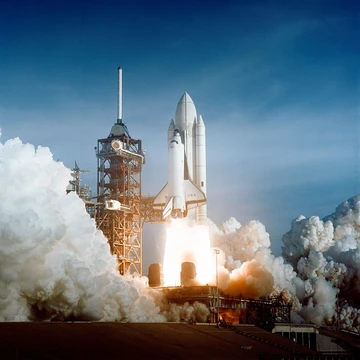
The Hubble Space Telescope was funded and built in the 1970s by NASA with contributions from the European Space Agency. Hubble was launched on STS-31 in 1990, but its main mirror had been ground incorrectly, resulting in spherical aberration that compromised the telescope's capabilities. The optics were corrected to their intended quality by a servicing mission, STS-61, in 1993. Hubble is the only telescope designed to be maintained in space by astronauts. Five Space Shuttle missions repaired, upgraded, and replaced systems on the telescope, including all five of the main instruments. The fifth mission was initially canceled on safety grounds following the Columbia disaster (2003), but after NASA administrator Michael D. Griffin approved it, the servicing mission was completed in 2009. The Space Telescope Science Institute (STScI) selects Hubble's targets and processes the resulting data, while the Goddard Space Flight Center (GSFC) controls the spacecraft. Hubble features a 2.4 m mirror, and its five main instruments observe in the ultraviolet, visible, and near-infrared regions of the electromagnetic spectrum.
Reader's Guide
The Hubble Space Telescope's significance lies in its ability to capture extremely high-resolution images with substantially lower background light than ground-based telescopes, due to its orbit outside Earth's atmospheric distortion. Many Hubble observations have led to breakthroughs in astrophysics, such as determining the rate of expansion of the universe. It has recorded some of the most detailed visible light images, allowing a deep view into space. Hubble is the visible light telescope in NASA's Great Observatories program; other parts of the spectrum are covered by the Compton Gamma Ray Observatory, the Chandra X-ray Observatory, and the Spitzer Space Telescope. Hubble's legacy includes demonstrating the value of space-based observatories and the feasibility of crewed servicing missions.
Did You Know?
- Hubble was not the first space telescope, but it is one of the largest and most versatile.
- Its main mirror was ground incorrectly, causing spherical aberration, corrected by a 1993 servicing mission.
- Hubble is the only telescope designed to be maintained in space by astronauts.
- The telescope is named after astronomer Edwin Hubble.
Frequently Asked Questions
Who is The Hubble Space Telescope?
Hubble is a space-based observatory placed into low Earth orbit back in 1990, named in honor of astronomer Edwin Hubble. It operates as one of NASA's four Great Observatories, with meaningful contributions from the European Space Agency.
What are The Hubble Space Telescope's powers and role?
Equipped with a 2.4-meter primary mirror, Hubble captures images across ultraviolet, visible, and near-infrared wavelengths. This makes it one of the most versatile and widely used research instruments in all of astronomy.
Why is The Hubble Space Telescope important?
Beyond its scientific output, Hubble has been a massive public-relations win for astronomy, producing iconic images that captivated the general public for decades. It remains a cornerstone tool that researchers across many fields depend on for critical observations.
Who built and operates The Hubble Space Telescope?
NASA leads the mission's day-to-day operations, though the European Space Agency has contributed significantly to both its development and ongoing support. The telescope was launched in 1990 into a low Earth orbit where it continues to circle the planet.
More in Space Missions 1-22
Spotted an error? Know more?
This is a living reference — every entry is fact-audited, and reader corrections feed straight into our audit queue. Suggest an edit · See this site's audit record